
Start with the age rule, not the look
A bunk bed is bought for a room but used by a child, so start with who sleeps where. The widely used safety rule is simple: children under six should not sleep on the top bunk. It is about how children move in their sleep and climb down half-asleep at night. Put the younger child on the bottom bunk, keep the top bunk for an older child who can climb up and down safely without help, and do not let the top bunk become a play area. Ask the Norvessa team if anything is unclear before you order.
Guardrails: the single most important check
Guardrails stand between a sleeping child and a fall, so check them before colour or finish. A safe top bunk has guardrails on all sides, including the side against the wall, because beds get pulled out for cleaning and children move. The rails should run the full length of the bed, with only a small, clearly defined opening for the ladder or staircase, and sit high enough above the mattress that a sleeping child cannot roll over them. That is why mattress thickness matters: a thick mattress raises the sleeping surface and shrinks the guardrail's effective height. Follow the maximum mattress thickness stated for the bed, and check on arrival that every rail is firmly fixed and its gaps are too small for a child's head or body to pass through.
Ladder or staircase: how your child actually gets up
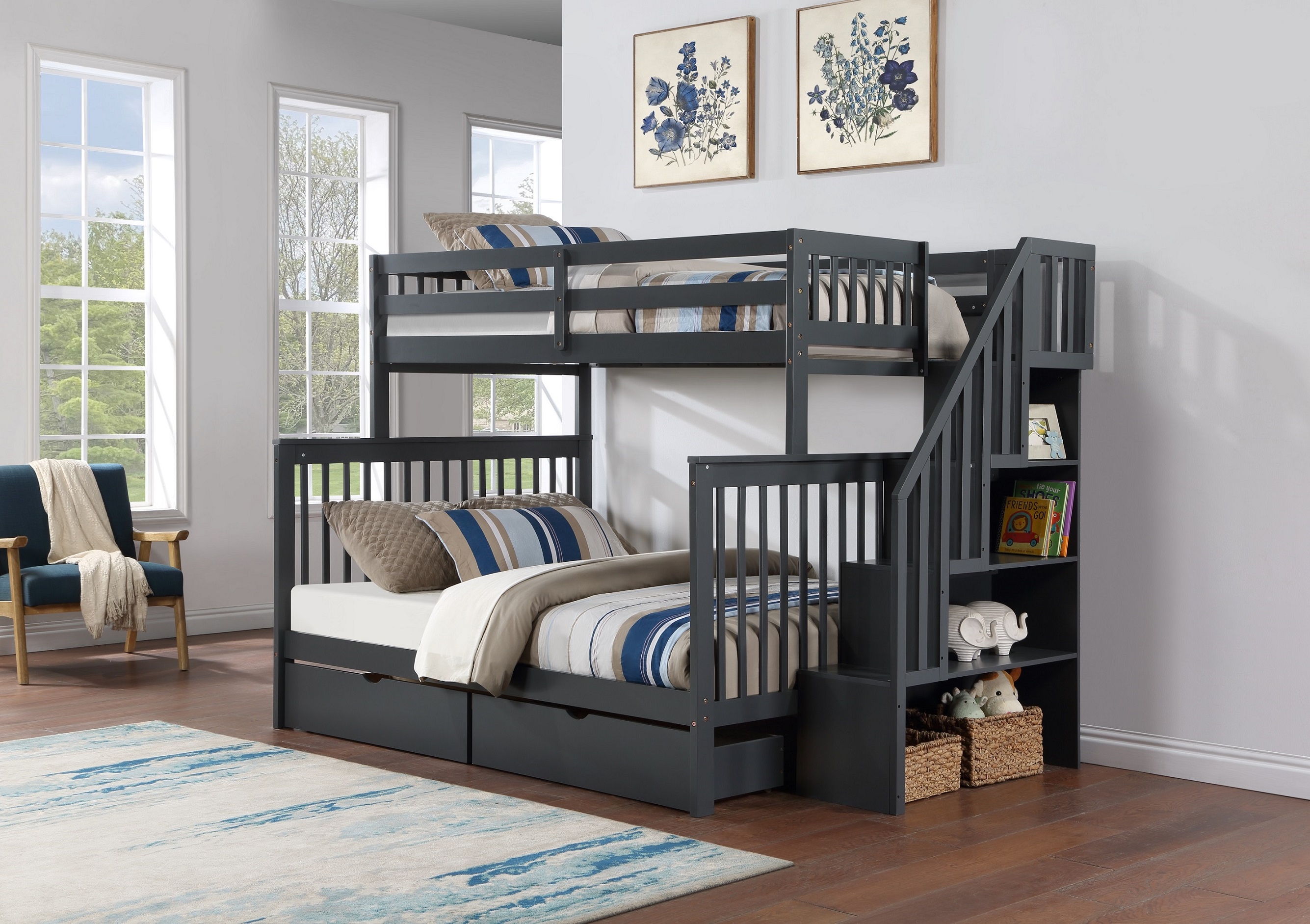
Think about the climb at 2 a.m., not just in the showroom. A straight ladder takes less floor space and suits a smaller Toronto bedroom, but it needs a firm grip, good footing and a child comfortable climbing it in the dark. A staircase bunk, such as the Single-over-Double Dark Grey Wood Staircase With Shelves Bunk Bed (SBI-B-1851), starting from $645 CAD, is steadier to climb and often adds storage, but it needs more floor space beside the bed. Whichever style you choose, check that it is fixed to the frame and does not wobble, that steps are wide enough for a child's foot, and that there is a clear landing at the top. Keep a night light near the steps, and agree on day one: no climbing the outside, no jumping from the top bunk.
Mattress fit: snug, flat and the right thickness
A bunk mattress must fit its frame exactly. Measure the usable inside space of the bunk, not just the size label, and choose a mattress that fills the frame without leaving a gap a limb could slip into. For a sense of current pricing, the NB 5 inch Essential Foam Mattress starts from $90 CAD, but prices vary by size, so check the exact size on the product page. The mattress should lie flat with no sagging in the middle, and on the top bunk it must stay within the bed's stated maximum thickness so the guardrails keep their full height. Do not add a box spring unless the product page specifically says the design takes one.
Frame strength, joints and weight limits
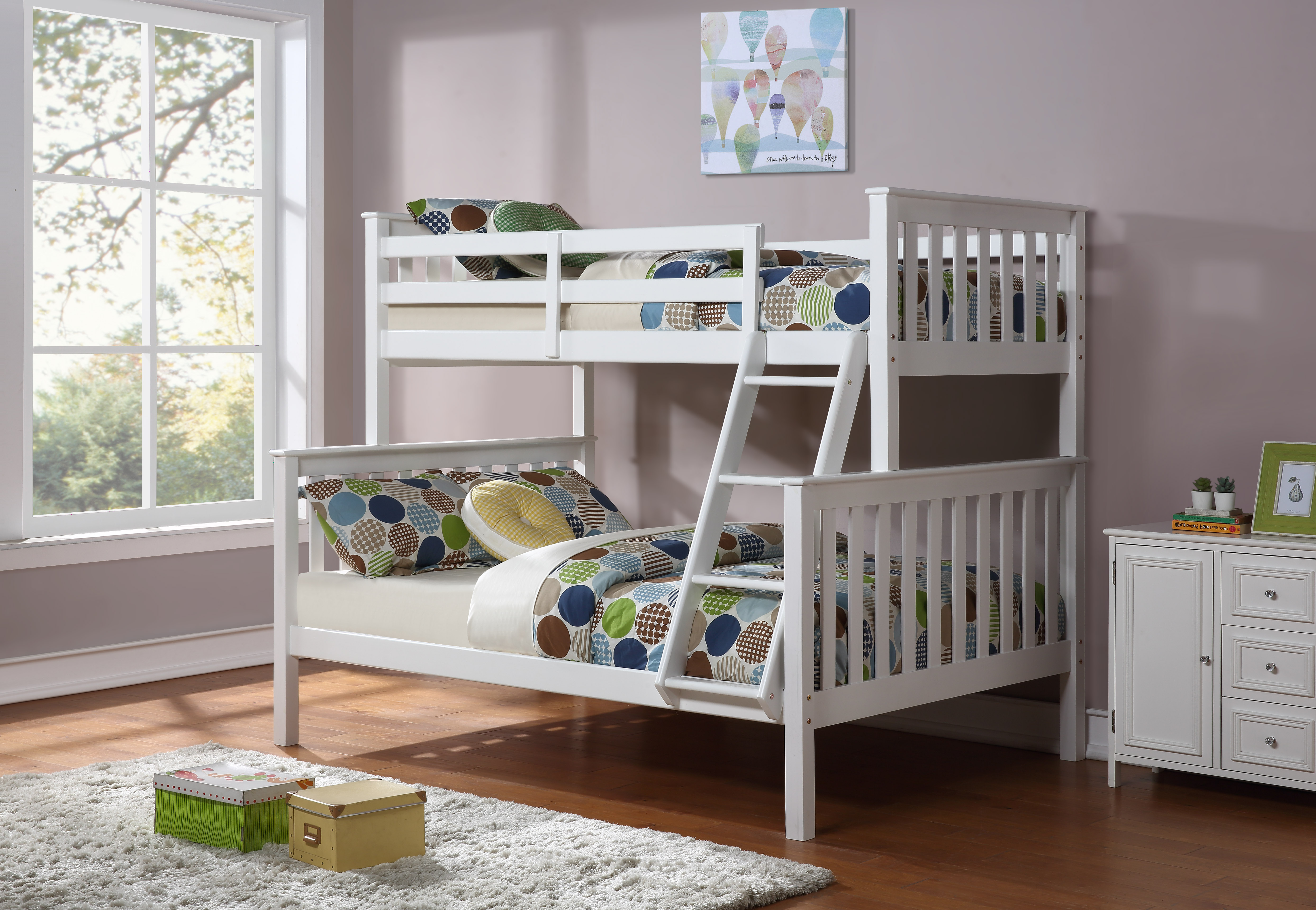
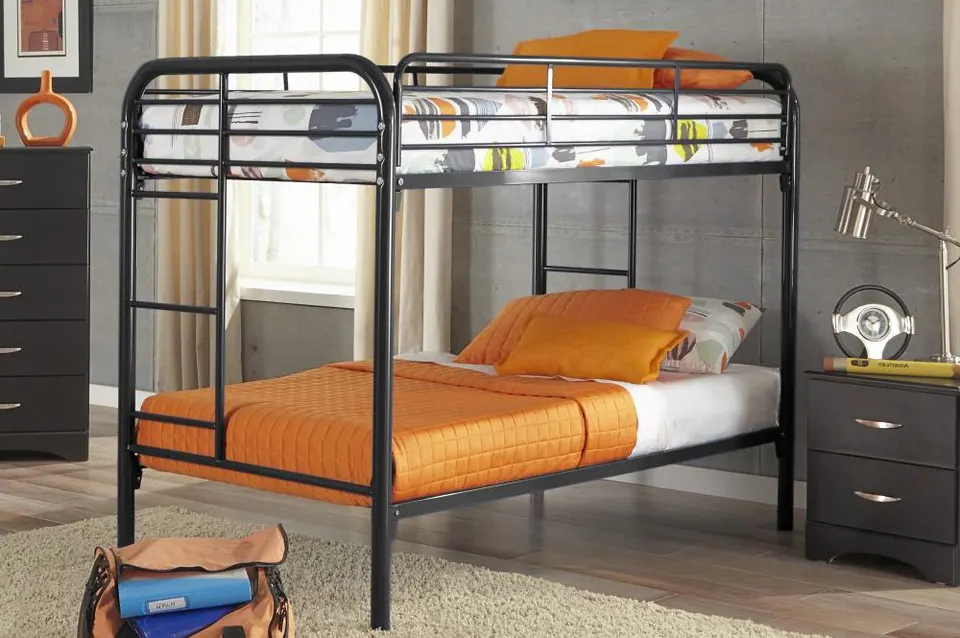
A bunk takes more daily punishment than an ordinary bed. Check how the frame is joined, not just how it looks. Joints should be tight with no wobble when you push the assembled bed from the side, all bolts should be present and fully tightened, and metal frames should have no sharp edges or cracked welds while wood frames should have no splits, splinters or loose rails. Every bunk has a stated weight limit for each bunk, so read it on the product page and keep the heavier sleeper in mind when choosing between Single-over-Single, Single-over-Double and Double-over-Double layouts. As a sense of the current range, the NB-2810 Single over Single Metal Bunk Bed starts from $225 CAD, the NB-2830 Double over Double Metal Bunk Bed starts from $285 CAD, and the Single-over-Double White Wood Bunk Bed (SBI-B-102W) starts from $499 CAD. Prices vary by size and option, so check the exact configuration on the product page.
Assembly and the monthly safety check
Most bunk bed problems start at assembly, not in the factory. Build the bed exactly as the instructions show, using only the parts supplied, and tighten every bolt in the order given. Once built, shake it gently from several directions: a safe bunk feels solid, not springy. Then build a short monthly habit into family life. Re-tighten bolts, because wood settles and use loosens fixings over time. Check guardrails, ladder fixings and slats, look for cracks, bent metal or split wood, and replace any damaged part before the bed is used again. Teach children the top bunk is for sleeping only. A five-minute monthly check is the cheapest safety feature a bunk bed has.
Delivery, returns and exchange in plain terms
Whichever bunk you choose, the same Norvessa terms apply. Delivery is inside your home between 6 PM and 10 PM, seven days a week, and same-day orders must be placed before 2 PM Toronto time and remain subject to manager confirmation. Delivery is free only in Mississauga, Brampton, Toronto, Vaughan, Markham and Newmarket; every other served city across the 82 Ontario delivery cities carries its listed per-city fee, so check your city's fee on the delivery page before you order. Pickup at 181 Queens Drive, York is by appointment only, and you can reach the team at +1 647 361 0053 or norvessabedding@gmail.com. Keep the original packaging where possible, report delivered damage within 24 hours, and note the published terms: eligible returns within 10 days, exchanges under the published 10-year terms. Those periods describe eligibility, not automatic approval.
A short checklist before you order
Run through this list once before you pay. The top bunk is for a child aged six or older who can climb safely, and guardrails run on all sides with a safe height above the mattress you will actually use. The ladder or staircase is fixed, steady and easy to climb in the dark, the mattress fits snugly and stays within the stated maximum thickness, and the frame is tight, free of sharp edges and within its stated weight limits for your sleepers. You have measured ceiling height, window and fan clearance and the delivery route, checked the price for your exact size and configuration, confirmed stock, and understood the delivery window, your city's delivery fee, the 10-day return window, the 10-year exchange terms and the 24-hour damage rule. If any answer is a guess, ask the team first.